
 News & Events
 PHIRDA
  2026.04.10
 369
369
On October 26, 2025, the 10th China Pharmaceutical Innovation and Investment Conference (CBIIC) was grandly held in Nanjing. The Oncology New Drugs Forum brought together leading experts, scholars, and industry leaders in oncology drug research and development across China. Discussions centered on global trends in oncology therapeutics, international regulatory developments, and frontier areas of innovation, aiming to further elevate China’s R&D capabilities in oncology and contribute to the advancement of national healthcare.
Session I: Keynote Speeches focused on global and domestic industry trends in oncology drug innovation and was moderated by YANG Dajun, Chairman & CEO, Ascentage Pharma.
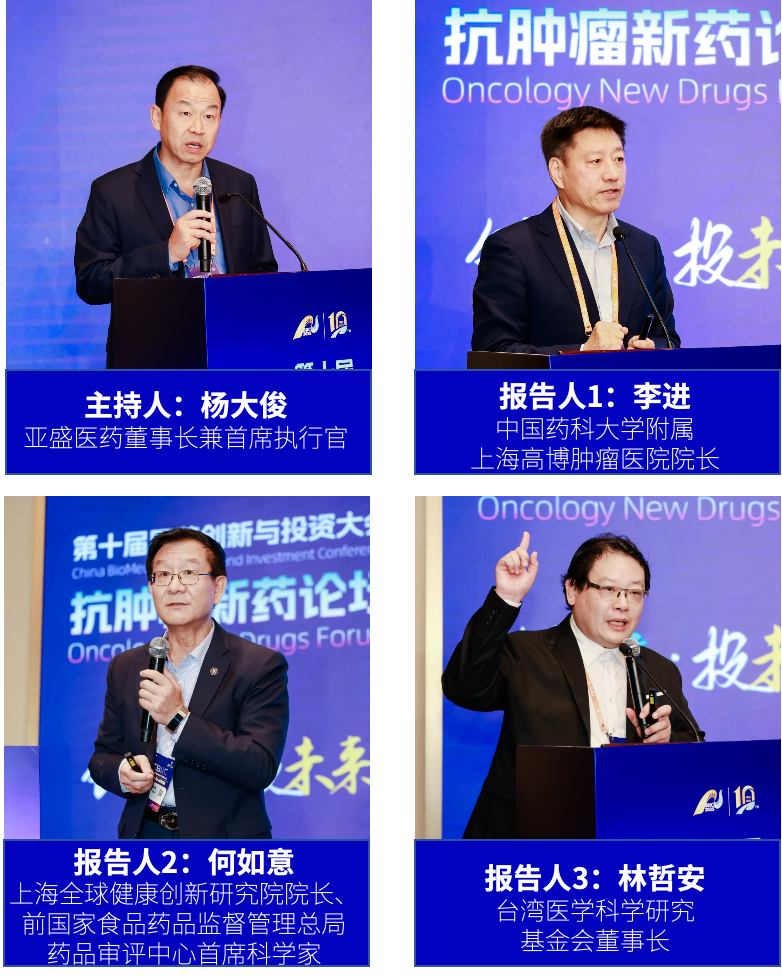
LI Jin, President, Shanghai GoBroad Cancer Hospital, China Pharmaceutical
University, delivered a keynote titled “The Direction of Breakthroughs in
China’s Original Innovation.” From a clinical perspective, he analyzed the
necessity and feasibility of Chinese innovative drugs going global. He noted
that, supported by favorable policies in recent years, China’s pharmaceutical
innovation has progressively aligned with international standards, and the
globalization of Chinese oncology drugs has become a reality. Through case
studies, he further illustrated global clinical development strategies for
innovative drugs, providing direction for the continued internationalization of
China’s pharmaceutical innovation ecosystem.
HE Ruyi, CEO of Global Health Innovation Institute, Former Chief Scientist of Center for Drug Evaluation, CFDA, presented “New Trends in Regulatory Changes and Risk Control for Innovative Drugs Entering International Markets.” He analyzed recent international policy shifts affecting global expansion and pointed out that increasingly stringent U.S. regulations have heightened challenges for Chinese pharmaceutical companies. He outlined regulatory measures proposed during the Trump administration aimed at restricting Chinese innovative drugs, including tighter FDA review standards, increased compliance costs, suspension of IND applications involving cross-border live cell studies, and limitations on FDA priority review vouchers to U.S. companies. He also highlighted that policies such as the Biosecurity Act, along with tariffs and investment restrictions, may further intensify industry challenges.
LIN Che An, Chairman, Foundation for East-West Medicine, delivered a keynote titled “China’s Innovative Drugs Open Up New Pathways for Cancer Treatment.” He proposed a “China-style innovation” strategy that integrates traditional Chinese medicine principles with artificial intelligence to overcome bottlenecks in drug development. He emphasized the advantages of Chinese-origin innovation, including multi-target approaches and the “Jun-Chen-Zuo-Shi” formulation philosophy, and advocated for the integration of Eastern and Western approaches. He suggested that domestic enterprises could develop novel molecular structures based on traditional medicinal plants while leveraging AI to accelerate target identification and clinical development.
Session II: Keynote Speeches focused on frontier trends in drug innovation across different cancer types and practical pathways for original innovation in China, moderated by CHEN Gang, Chief Scientific Officer, R&G Pharma Studies; Former Team Leader, Statistical Review, Oncology Drug Review Center, U.S. FDA.
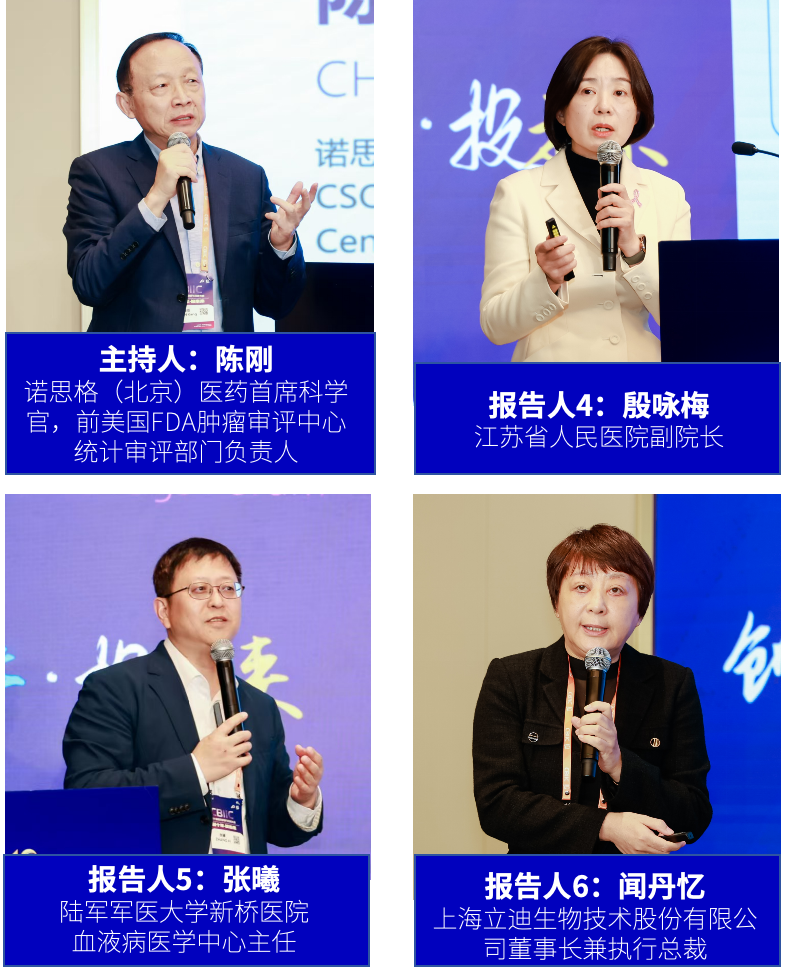
YIN Yongmei, Vice President, Jiangsu Province Hospital, presented “The ADC Revolution in Breast Cancer Treatment: Deconstructing Tradition and Establishing New Standards.” She reviewed the evolution of antibody-drug conjugates (ADCs) in breast cancer and outlined their transformative impact. Her presentation highlighted how ADCs have reshaped treatment standards for HER2-positive patients and achieved breakthroughs in HER2-low populations. Looking ahead, she noted that ADCs may enable cross-indication therapies and advocated for combination strategies (e.g., ADC plus immunotherapy) and emerging technologies such as bispecific ADCs and radioconjugates.
ZHANG Xi, Director, Hematology Medical Center, Xinqiao Hospital, Army Medical University, provided an in-depth analysis of trends in innovative drug development for hematologic malignancies in China. From a clinician’s perspective, he reviewed the global R&D landscape and emphasized China’s significant progress, with original innovations driving a shift from reliance on imports to optimized combination therapies. He highlighted key technologies including cell therapy, ADCs, and multispecific antibodies, noting substantial contributions from domestic companies. He also underscored the importance of intellectual property protection and data quality, suggesting that “China solutions” could help redefine international treatment guidelines while calling for deeper original innovation to avoid homogenization.
WEN Danyi, Chairman of the Board & CEO, Shanghai LIDE Biotech Co., Ltd., introduced approaches to advancing clinical research and translational application of biomedical technologies through living biobanks. She discussed ongoing efforts to establish standards for biobanks and highlighted their role in facilitating translational research for innovative drugs. She explained that living biobanks (e.g., PDX models and organoids), distinct from traditional static biobanks, support drug screening and development. Through case studies, she illustrated their value while identifying key challenges such as the lack of unified standards and difficulties in resource sharing. She also introduced efforts led by the association, in collaboration with multiple specialized committees and drawing on regulatory experience from the Beijing Municipal Health Commission, to advance standardized database development.
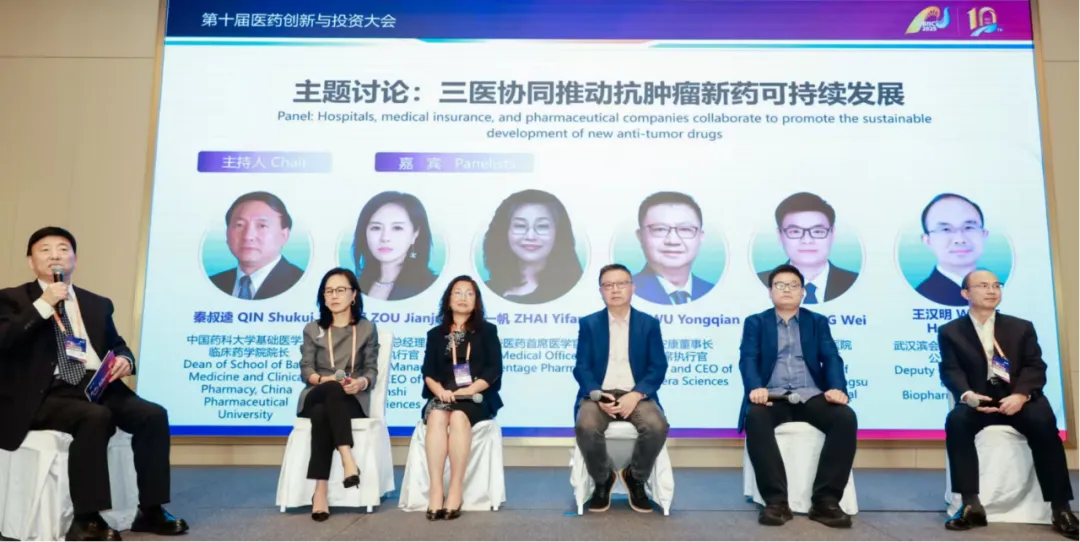
The final Panel Discussion, titled “Hospitals, medical insurance, and
pharmaceutical companies collaborate to promote the sustainable development of
new anti-tumor drugs,” was moderated by QIN Shukui, Dean, School of Basic
Medicine and Clinical Pharmacy, China Pharmaceutical University. Panelists
included ZOU Jianjun, General Manager & CEO, Junshi Biosciences; ZHAI Yifan,
Chief Medical Officer, Ascentage Pharma; WU Yongqian, Chairman & CEO,
TransThera Sciences; PENG Wei, Deputy Chief Physician, Jiangsu Cancer Hospital;
and WANG Hanming, Deputy General Manager, Binhui Biopharmaceutical Co., Ltd.
During the discussion, ZOU Jianjun emphasized the challenges of “0-to-1”
innovation and highlighted the need for long-term investment in cutting-edge
fields and AI-driven drug development, while proposing diversified payment
mechanisms to address market access challenges. ZHAI Yifan called for deeper
collaboration among healthcare providers, researchers, and industry, advocating
for patient-centered approaches and noting that a key challenge for AI-enabled
R&D lies in the global acceptance of clinical trial data. WU Yongqian
stressed the critical role of translational medicine, emphasizing that early
involvement of clinicians enables precise identification of clinical needs and
calling for breaking disciplinary barriers through institutional innovation.
PENG Wei focused on whole-course cancer management, highlighting the importance
of improving patients’ quality of life through supportive care, and advocated
for integrated solutions combining digital platforms, combination therapies, and
policy support to ensure patients not only live longer but live better. WANG
Hanming introduced recent clinical progress in oncolytic virus therapies for
solid tumors, emphasizing their safety advantages and potential in combination
therapies, and noted the importance of international collaboration in advancing
China’s innovative drugs. In conclusion, QIN Shukui called for strengthened
collaboration between clinical practice and industry, the development of more
efficient mechanisms for new drug approval, and continued commitment to the
vision of “Healthy China.”
 News & Events
PHIRDA 2026-06-17
549
News & Events
PHIRDA 2026-06-17
549
 News & Events
PHIRDA 2026-06-04
640
News & Events
PHIRDA 2026-06-04
640
 WeChat Official Account
Copyright © 2017-2020 PhIRDA All rights reserved. Technical Support:SZHD


 Top News