
 News & Events
 PHIRDA
  2026.04.10
 393
393
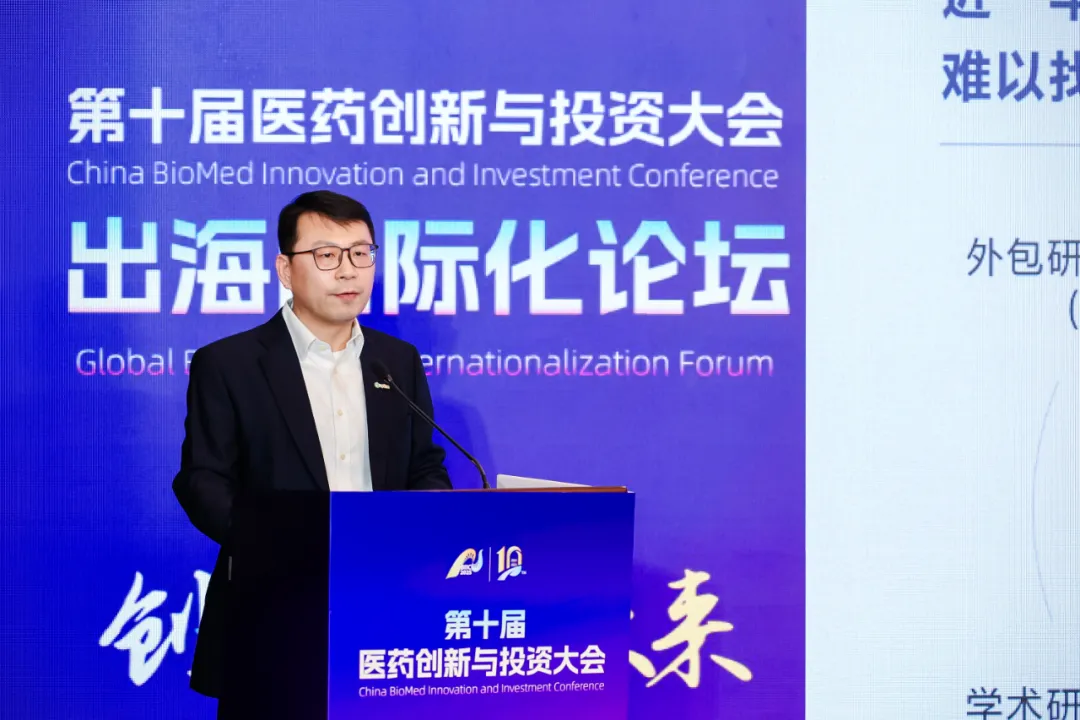
On October 27, 2025, the Global Expansion & Internationalization Forum, a featured session of the 10th China Pharmaceutical Innovation and Investment Conference (CBIIC) was successfully held in Nanjing. Over the past decade, China’s pharmaceutical innovation capabilities have advanced significantly, accompanied by deepening international collaboration. As a newly established forum this year, the session focused on the core issues surrounding the global expansion of Chinese innovative medicines, systematically examining strategic planning and practical approaches for companies going global, and providing a high-level platform for dialogue to enhance the international competitiveness of Chinese innovation.
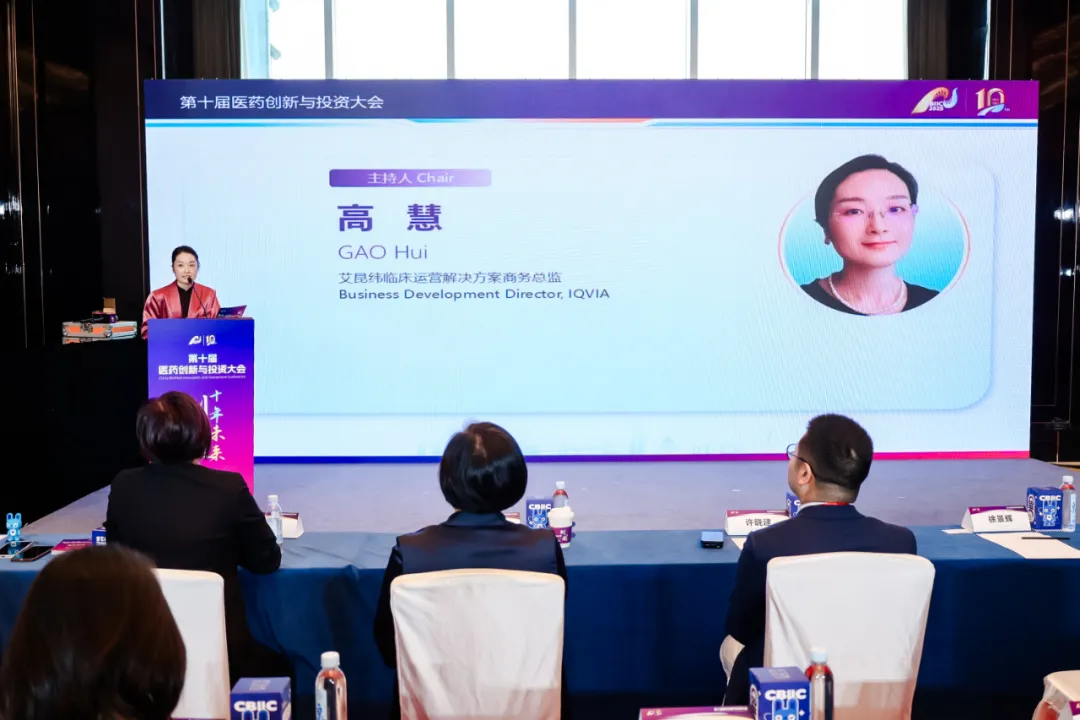
The forum was moderated by GAO Hui, Business Development Director, IQVIA.
01 Keynote Speech 1: Landscape of Globalization by Chinese Biotechs
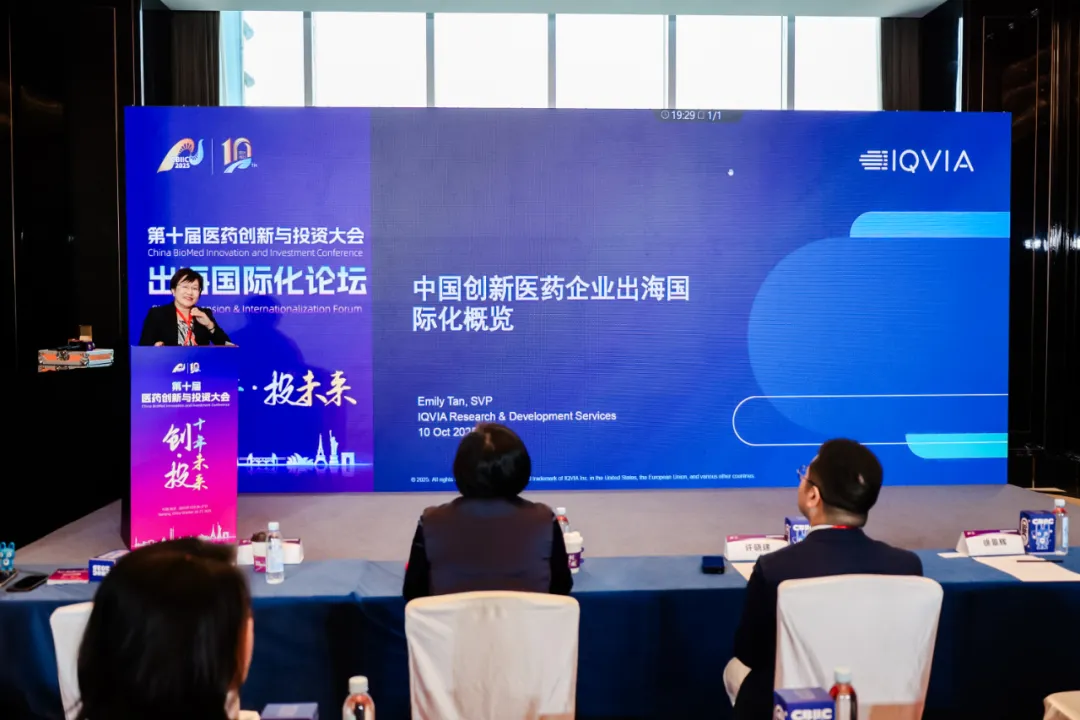
Emily TAN, Senior Vice President, Business Development, R&DS APAC, IQVIA, provided a comprehensive overview of the business models and clinical strategies adopted by Chinese pharmaceutical companies in their global expansion. She noted that domestic policy adjustments and moderating market growth have prompted companies to seek new growth trajectories, with North America, Europe, Latin America, and South Asia emerging as key strategic markets. Companies are currently pursuing diversified pathways, including supply chain models, NewCo structures, and joint ventures, while facing challenges such as high FDA and EU GMP certification costs, extended equity exit cycles, and complex partnership negotiations. Regarding innovative drug globalization strategies, she emphasized the importance of clear market positioning, portfolio planning, and disciplined development timelines. The proportion of overseas clinical projects undertaken by Chinese companies, particularly start-ups, has risen to 30 percent. However, ensuring that clinical data meet international standards and are acceptable to the FDA remains critical, alongside careful consideration of indications, ethnic differences, and standards of care. Through scientific selection of target countries, optimized patient enrollment strategies, and accelerated development processes, Chinese pharmaceutical innovators are steadily strengthening their global competitiveness and enhancing international accessibility and recognition.
02 Keynote Speech 2: Path to Global Growth
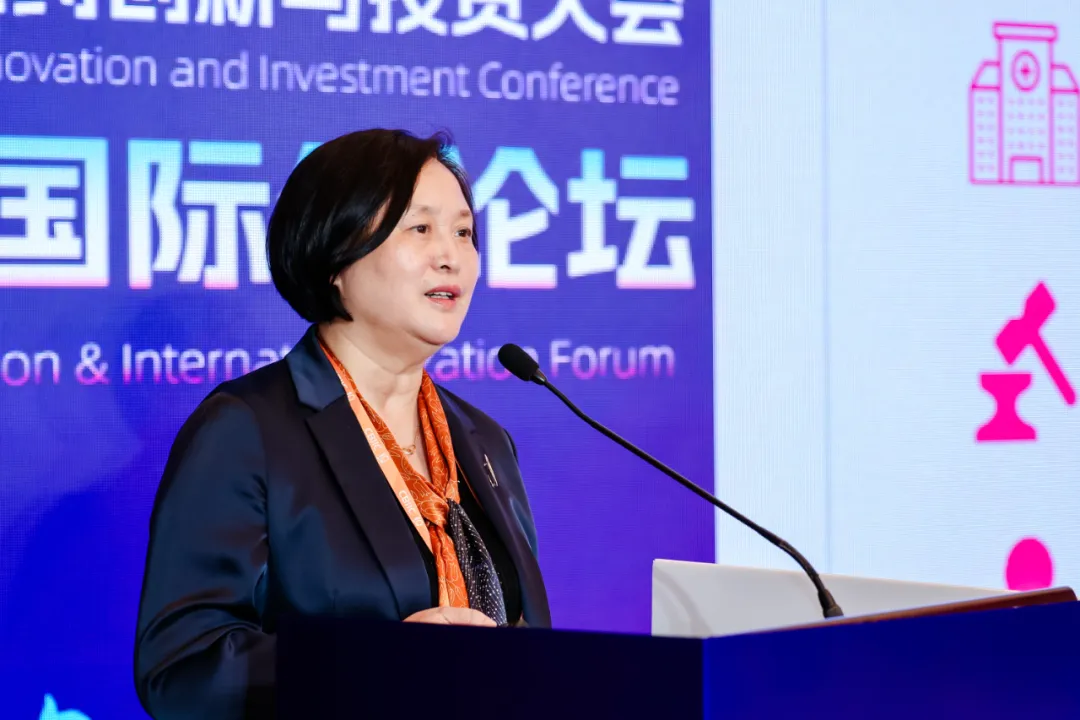
CUI Yiling, Executive Vice President of HUTCHMED, shared the company’s practical experience in global expansion and international operations. She noted that over the past decade, China’s innovative drug sector has risen rapidly under the combined impetus of policy support and corporate commitment. Using fruquintinib as an example, she highlighted its more than ten-year development journey, its launch in China in 2018, and its successful entry into the U.S. market in 2023, where it demonstrated strong commercial performance and showcased the global competitiveness of Chinese-origin innovation. She emphasized that successful globalization reflects not only product strength but also systemic capabilities. Companies must build comprehensive readiness across clinical research, manufacturing, quality systems, regulatory compliance, and commercialization. By combining independent R&D with strategic global partnerships, HUTCHMED has advanced a sustainable internationalization model, strengthened global team capabilities, and established efficient operational systems through deep collaboration with multinational pharmaceutical companies. She underscored that Chinese innovative drug globalization should pursue steady progress through strategic planning and capability enhancement to achieve sustained competitiveness on the global stage.
03 Keynote Speech 3: China’s Innovation, Global Value
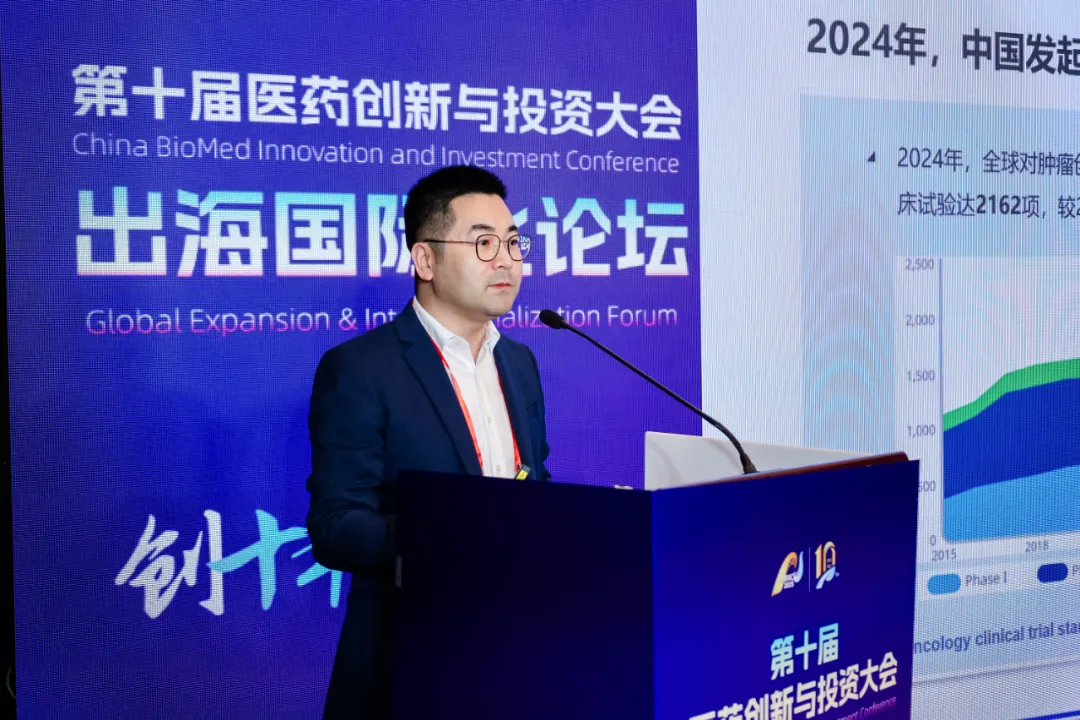
Thomas XU, Corporate Vice President of Jiangsu Hengrui Pharmaceuticals, stated that Chinese innovative medicines are reshaping the global pharmaceutical landscape. Nearly 30 percent of global oncology clinical trials are now initiated by Chinese companies, and more than 30 percent of innovative pipelines licensed by multinational pharmaceutical companies originate from China. He attributed this rise to efficient R&D systems, scalable capabilities, and structural opportunities within the global healthcare market. Looking ahead, he emphasized the need to deepen research into disease biology, expand therapeutic technology boundaries, leverage AI-driven drug discovery, and build integrated end-to-end technology platforms to sustain global competitiveness. He also acknowledged the challenges Chinese companies face in talent development, cross-cultural integration, and organizational transformation. Hengrui has pursued a balanced approach combining independent innovation with open collaboration, while cultivating globally minded talent with strategic vision and cross-cultural competence. He called for strengthened collaboration among industry, academia, healthcare institutions, and regulators to build an open and mutually beneficial innovation ecosystem that amplifies the global value of China’s innovation.
04 Keynote Speech 4: How Chinese Innovation Can Unlock Global Markets
Dr. XU Jinghui, Chief Technology Officer of Cytiva China, shared key findings from the 2025 Global Biopharma Index and analyzed the global influence and potential of Chinese innovation from a multinational enterprise perspective. He noted that China has established significant strengths in pharmaceutical innovation, industry-academia collaboration, talent development, and patent generation. Nevertheless, globalization still presents challenges, including gaps in industrial cluster maturity, regulatory complexity, supply chain security, and shortages of high-end talent. He emphasized that global expansion must be built upon a robust innovation ecosystem spanning R&D, manufacturing, supply chains, and regulatory alignment. He introduced Cytiva’s end-to-end bioprocess empowerment initiatives, talent development programs, and diversified supply chain strategies, which cover approximately 85 percent of bioprocess workflows and support a substantial number of early-stage and global expansion pipelines from China. Through its multi-regional presence in China, Europe, and the United States, along with 23 innovation and R&D centers and 36 manufacturing sites worldwide, Cytiva continues to enhance its global service capabilities. He proposed three key priorities: supply chain diversification, localized in-region for-region manufacturing, and the application of AI and digital technologies to improve efficiency. Cytiva will continue leveraging its global network and systematic capabilities to support Chinese innovative medicines in achieving efficient global expansion and unlocking global value.
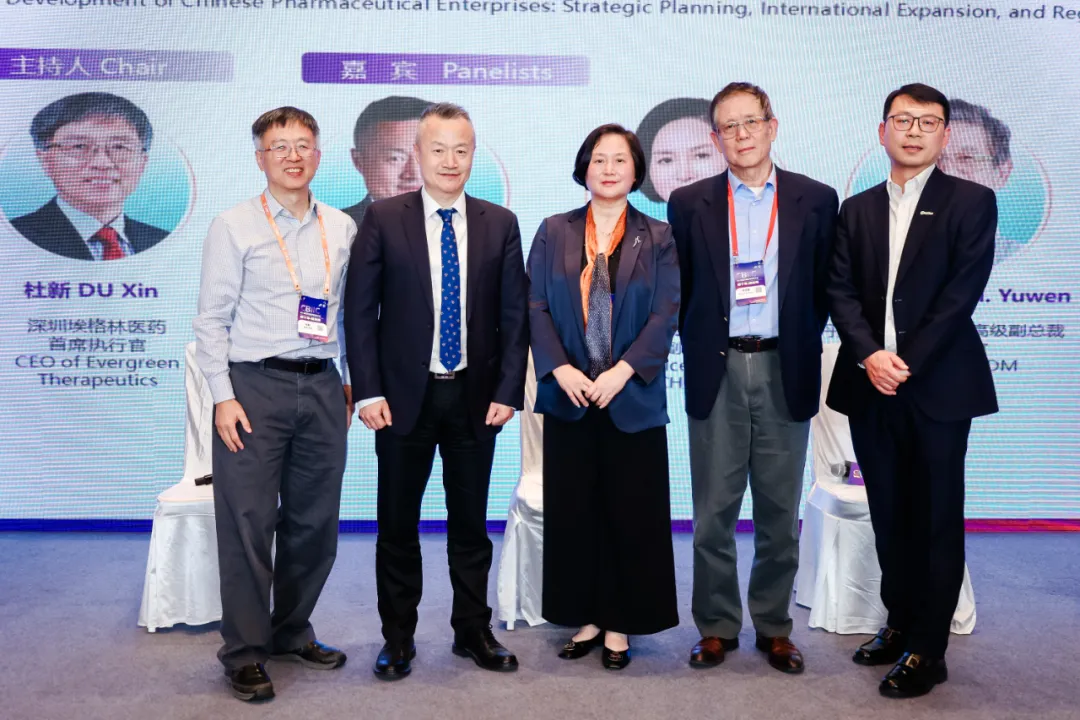
Panel 1: Global Development of Chinese Pharmaceutical Enterprises: Strategic
Planning, International Expansion, and Regulatory Harmonization
Moderated by DU Xin, CEO of Evergreen Therapeutics, representatives from Betta Pharma, HUTCHMED, SDM Bioservices, and Cytiva engaged in in-depth discussions on key issues surrounding international development. John WAN, Senior Vice President and Chief Operating Officer of Betta Pharma, emphasized that true globalization should be defined by independent R&D and successful commercialization abroad, supported by alignment with international regulatory systems and multi-regional clinical trials to achieve synchronized launches in Europe and the United States. CUI Yiling noted that globalization is not unilateral expansion but a long-term strategic commitment that seeks balance between differentiation and compatibility. Howard H. Yuwen, SVP and Chief Business Officer of SDM Bioservices, highlighted the importance of early planning in health economics and regulatory strategy to avoid obstacles in later-stage internationalization. Dr. XU Jinghui stated that Cytiva will continue supporting domestic innovation through comprehensive lifecycle solutions spanning R&D, manufacturing, and supply chain systems, enabling Chinese enterprises to transition from global participation to global leadership. Panelists agreed that Chinese pharmaceutical innovation has entered a new phase of globalization, requiring long-term commitment and strengthened international collaboration to evolve from molecule exportation to the creation of global value.
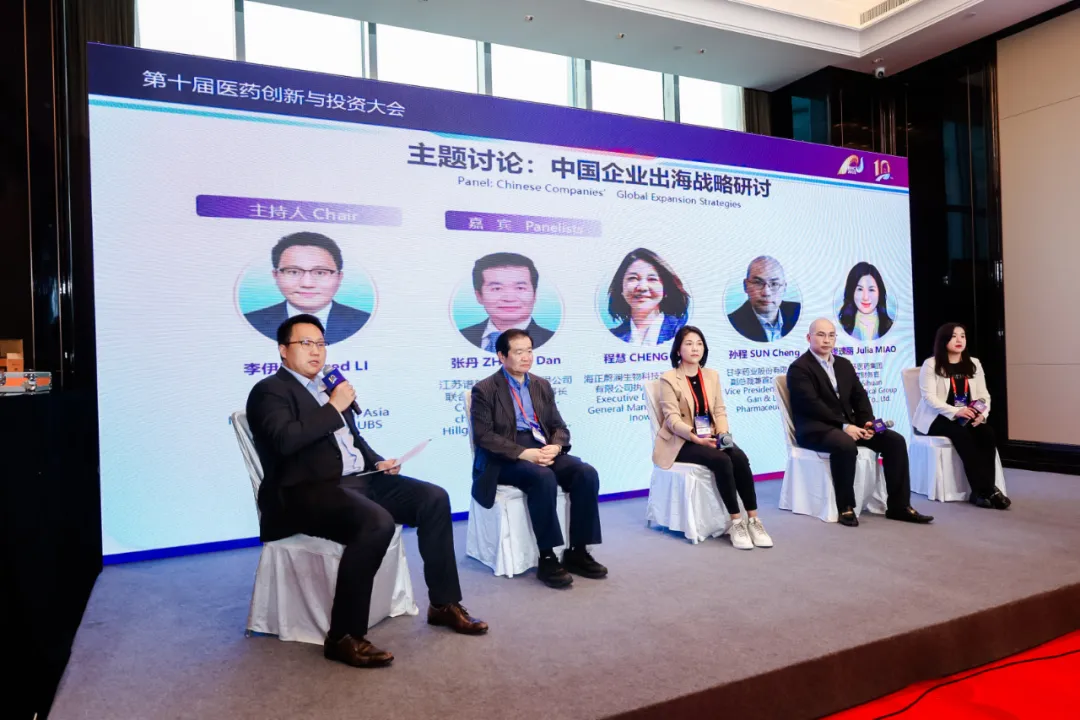
Panel 2: Chinese Companies’ Global Expansion Strategies
Moderated by Alfred LI, Managing Director of the Asia Healthcare Team at UBS, the second panel brought together representatives from ClinChoice, Hisun Inowave, Gan & Lee Pharmaceuticals, and Sihuan Pharmaceutical. ZHANG Dan, Co-founder and Chief Strategy Officer of ClinChoice, emphasized that successful globalization requires alignment between scientific innovation and capital strategy, illustrating the importance of capital and R&D synergy through cross-border M&A and empowerment of domestic innovation. CHENG Hui, Executive Director and General Manager of Hisun Inowave, reflected on Hisun’s international journey since obtaining FDA certification in 1992 and advocated moving beyond product exportation toward globalization of technology, manufacturing, and capital. SUN Cheng, Vice President and CFO of Gan & Lee Pharmaceuticals, described the company’s market-for-technology collaboration model, leveraging phased deployment and diversified business development partnerships to advance pipelines simultaneously in domestic and overseas markets. Julia MIAO, CFO of Sihuan Pharmaceutical Group, observed that going global presents both opportunities and challenges, particularly in balancing market scale, investment returns, and localized team building. The panel concluded that Chinese pharmaceutical globalization has entered deep waters. To navigate an increasingly complex global environment, companies must develop a thorough understanding of local regulations and cultures, establish mutually beneficial cooperation mechanisms, and cultivate internationally oriented talent in order to sustain growth through openness and innovation.
 News & Events
PHIRDA 2026-06-17
549
News & Events
PHIRDA 2026-06-17
549
 News & Events
PHIRDA 2026-06-04
640
News & Events
PHIRDA 2026-06-04
640
 WeChat Official Account
Copyright © 2017-2020 PhIRDA All rights reserved. Technical Support:SZHD


 Top News